Building Open Source Hardware is a very very practical reference guide on the nuts and bolts of going from a maker project to a growing business. Alicia has brought together a great description of the state of the art.
She doesn’t have all the answers yet – no-one does. But this book is the start of an enormous change in the way we make things. Turning the open source hardware movement into a radical open source decentralised manufacturing system.
If your new years resolution is to get fit there’s no better way than eat less and move more. Technology can’t (yet) stop you eating but it can help with the moving, so here are some of the fitness trackers you can get from Fitbit, Withings and Jawbone.
Prices start from around 65 CHF. Or you can just use an app for your smartphone like Moves but then you must carry your smartphone all the time. If you put it down it won’t track your steps.
If you want to hack your life then If This Then That is the site you need. Make the internet work for you doing things that usually only coders can 🙂
If you want a heads-up on CES there is a useful CES preview at TechRadar. Plenty of wearables.
My VOIP provider that lets me have a UK incoming phone number is LocalPhone but there are others, including Skype. As expats living on an international border having multiple incoming phone numbers in different countries can be useful.
Pangloss Labs is a centre of expertise in open source hardware, software and most importantly ideas and techniques. Currently both a French association and a Swiss association, run by entrepreneurs, we hold experimental (hardware, software and social entrepreneurship) labs, and prototype innovation activities across various sectors.
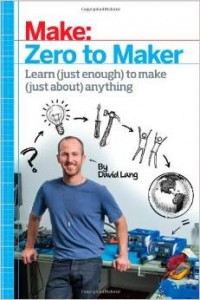
Zero to Maker by David Lang is a book does exactly what it says on the tin. It’s a guide to how to find out how to learn (just enough) to make (just about) anything. I wanted this book so much I helped fund it on Kickstarter.
And now, as we have a copy at Post Tenebras Lab as well, one of the members has been making the OpenROV from this book, which we tested in a swimming pool in Carouge.
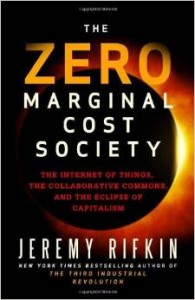
Jeremy Rifkin has a style of writing that annoys a lot of people, if you read the comments online. I found the Zero Marginal Cost Society to be a valuable contribution to the debate that is taking place about capitalism. Logically, capitalism will always find the lowest cost option, but with open source that cost should be approaching zero. So what happens if everything takes the lowest possible cost? What does society look like? How does it function?
This is not a howto guide that takes us to the economics of “Star Trek The Next Generation” but it helps move the debate on, and should be required reading for anyone involved in the sharing economy.
My main project right now is the creation of an ecologicalFablab here in the Geneva region.
“Fab Labs give people the tools they need to create technology and make (almost) anything”
Professor Neil Gershenfeld – Massachusetts Institute of Technology (MIT)
Eco-Innovation is at the cutting edge of the third industrial revolution. When you combine innovations in energy production with the open source hardware movement you create very low cost & high value technologies.
We are building a creative space to stimulate local innovation. We dare to dream big, start small and grow fast. This has become Pangloss Labs. If you’re interested in joining us, take a look at our web site
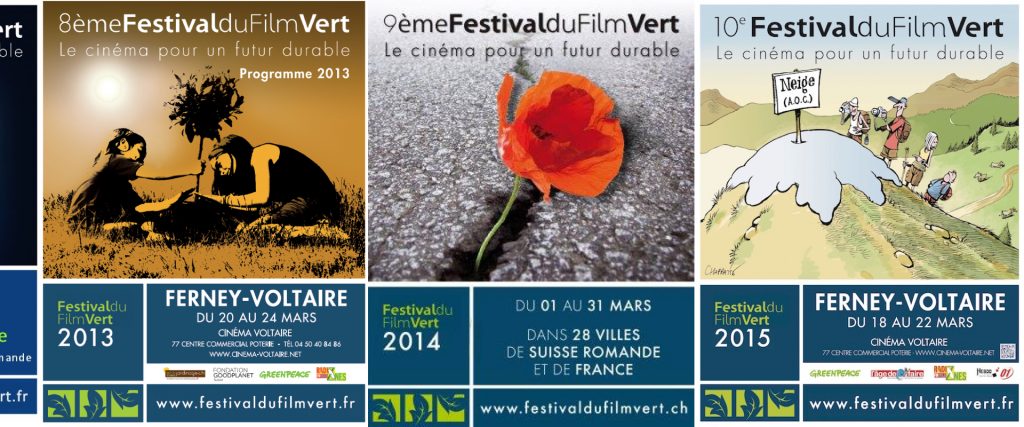
The fourth edition in Ferney will be held on 18th-22nd March 2015.
In 2012, the Eco-Pratique association decided to put on a green film festival. Rather than start from scratch we joined with the Swiss Romande “Festival du Film Vert” and brought it across the border into France.
Each year we choose from dozens of the best new documentaries in both English and French and choose 11-12 for the film festival. To be chosen they have be a great film first, show a problem and propose a concrete solution to the problem. No “we’re all doomed” films at our festival